
Define the water and separation duty
State the source water, clarifier troubleshooting, coagulant sequence, separator and downstream process before comparing polymers.
A product that works in one water cannot be assumed to transfer to another turbidity, mineral or hydraulic condition.
Preserve a representative sample
Record sampling point, operating state, pH, temperature, turbidity or suspended solids, alkalinity, conductivity and upstream chemicals.
Mix the bulk sample consistently before splitting jars and retain the untreated reference.
Screen ionic profile and form
Compare coded anionic, cationic and nonionic candidates across plausible molecular ranges and powder or emulsion forms.
Charge information narrows the screen; measured clarification and downstream response decide the result.
Normalize preparation and dose
Keep active basis, stock concentration, water quality, aging, addition order and repeatable jar-test and plant mixing consistent for every candidate.
Unequal make-down or dose conversion invalidates a supplier comparison.
Measure the complete treatment result
Track treated-water turbidity or solids, settling behavior and downstream response, floc strength, separation rate, clarified-water quality, sludge volume and filter consequences.
Large visible floc is not sufficient if it breaks, carries over or shortens the filter run.
Release a bounded operating window
Link product code, lot, raw-water condition, dose basis, mixing, measurements, COA, SDS, packaging and quotation.
Revalidate after a meaningful water-source, coagulant, equipment, preparation or product change.
Separate chemistry from equipment faults
Check water change, sample handling, product identity, make-down, pump calibration, mixing and clarifier loading before changing the approved chemistry.
Change one controlled factor at a time and retain the accepted reference.
Close the technical and purchasing record
State the tested window, rejected conditions, field-trial plan, sample quantity, monthly demand, packaging, documents and destination.
Routine supply should match the traceable identity that produced the accepted result.
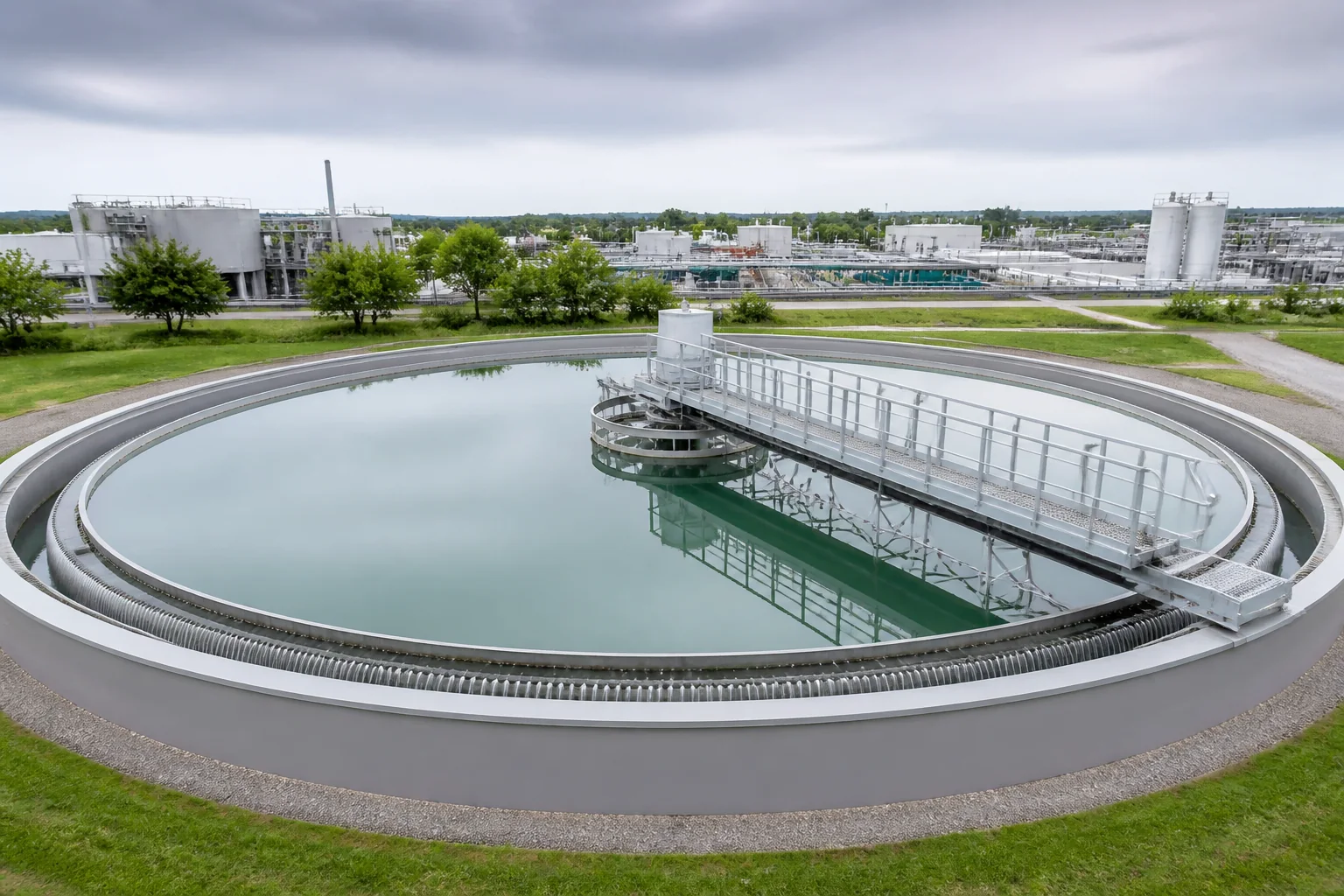
Separate water chemistry from clarifier hydraulics
Begin with the symptom and the last stable operating period. Pin floc may indicate incomplete destabilization, underdose or insufficient contact. Large fragile floc can point to excessive polymer or downstream shear. Rising solids may be hydraulic, biological or gas-related rather than a polymer problem. Uniform carryover can result from overload, poor distribution or sludge-blanket control.
Check source-water turbidity, pH, temperature and coagulant demand together with product identity, solution age, pump calibration, addition order and mixer condition. Inspect flow, inlet distribution, weirs, sludge withdrawal and blanket depth. Run a short controlled jar test with the current product and retained reference where available, changing one factor per series.
Confirm recovery across a representative operating period, not one clear grab sample. Record water data, chemical lots and feeds, hydraulic condition and treated result on one timeline. Define the trigger for another test instead of normalizing repeated emergency dose increases.
Keep raw measurements, rejected conditions and the accepted reference with the decision. Define who owns field confirmation, which changes trigger retesting and how later lots will be checked against the same process evidence. This closes the gap between an attractive laboratory observation and a repeatable water treatment program. Record the units, analytical method, reading time and operator for every acceptance result. When the source water or production state moves outside the tested envelope, return to a controlled comparison before changing the routine product or dose. Share the approved limits with operations, laboratory, purchasing and receiving teams so technical evidence follows the material through routine supply.