
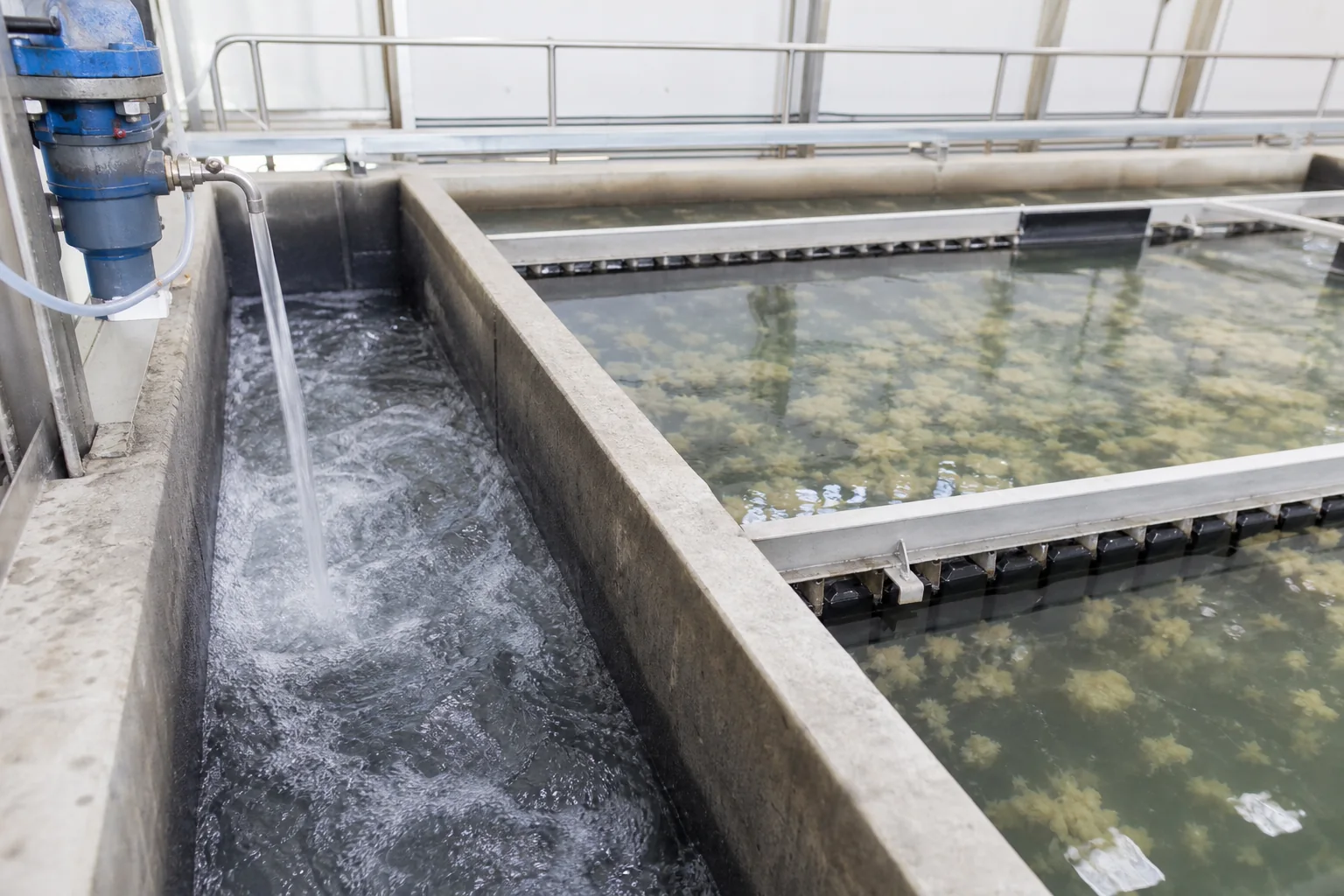
Distinguish function from charge
Cationic describes positive ionic character, not a single polymer or a universal water-treatment function. Specify whether the proposed material is being evaluated as a high-molecular-weight flocculant, a coagulant aid or another defined treatment component.
The cationic product route concerns sample screening for a stated duty. A different cationic coagulant family should not be substituted silently for a PAM flocculant merely because both have positive charge.
Define the treated suspension
Record source water, organic or mineral solids, pH, conductivity, temperature and current chemicals. Identify the condition at the actual injection point, not only at the raw-water inlet. Upstream coagulation can change the substrate that the polymer encounters.
Preserve normal and difficult samples, noting collection and storage. Avoid ranking suppliers using unrelated waters or a charge-demand observation taken under a different chemical sequence.
Request a purposeful sample panel
Ask why each proposed charge and molecular profile is included and how the supplied form fits the equipment. A small coded panel with controls and repeat tests is more interpretable than many unlabelled samples tested once.
Include a lower-charge or alternate ionic candidate when the water evidence justifies it rather than force a preconceived charge choice. Retain the link between laboratory code and commercial grade.
Keep preparation comparable
Use current grade-specific wetting, inversion and dilution guidance with actual preparation water and available residence. Record solution age, concentration and transfer history. Product form and make-down capability can affect the result independently of charge.
Confirm feed calibration on the product or active basis used in testing. A nominal pump setting is not evidence that candidates received equivalent additions, especially when the offer changes activity or supplied form.
Measure the complete useful window
Record clarified-water quality, capture, floc behaviour and separator stability over a practical dose range. Include carryover or downstream filter effects where relevant. Avoid approving a single high-dose jar because the supernatant initially looks clear.
Use the clarifier diagnostic framework when the jar and plant disagree. Check hydraulics and chemical delivery before deciding that a different cationic grade is necessarily required.
Check application-specific eligibility
For potable or sensitive reuse duties, ask the responsible team which exact product evidence and use conditions are required. A cationic label, current SDS or favourable test does not independently establish product eligibility.
Keep the documentary qualification separate from process acceptance while connecting both to the offered identity. Do not infer approvals from another grade, company logo or an unrelated certificate.
Tie the offer to the accepted trial
Record the sample code, formulation, tested envelope, preparation, active definition and receiving method. Compare delivered cost at the accepted consumption and identify any pending plant confirmation before a large commitment.
Send the water and chemical program through the cationic water-polymer enquiry. A bounded proposal is more useful than a promise that one positive-charge product will cover every colloidal, organic or recycle-water condition.
Preserve the functional identity
Write the complete polymer function and proposed grade in the stores and purchasing record, not only cationic chemical. Include preparation instructions and the approved application boundary. If an alternate belongs to a different cationic polymer family, mark that as a material change rather than a simple equivalent.
Attach the current sample evidence and any product-use conditions to the order. Receiving and operations should be able to identify whether the delivered material is the high-molecular-weight aid evaluated, without guessing from a positive-charge label or the appearance of a liquid container.