
Use composition, not conductivity alone
Conductivity is useful for tracking water change but does not fully describe the ions, residual chemicals or suspended material affecting polymer response. Provide the measured water chemistry relevant to the process as well as conductivity and temperature.
The recycle-water route should identify the intended reuse. Do not purchase against a salt-tolerant label without knowing what water and separation conditions the claim represents.
Define the recycle envelope
Record fresh and recycled sources, blend proportions, production events, pH, solids and upstream chemicals. Include normal and difficult credible conditions, not just one sample taken during a low-demand period.
Distinguish actual operating samples from synthetic recipes. If composition is changing, ask the evaluator which missing analyses matter for the proposed comparison rather than assume every water with the same conductivity is equivalent.
Separate make-down and process exposure
The water used to prepare polymer can differ from the recycle water being treated. Record both. A formulation may require a preparation condition that changes equipment or freshwater demand even when its final separation performance is useful.
Use grade-specific wetting or inversion guidance and feasible residence and transfer. Include any special preparation requirement in the commercial evaluation instead of silently ranking a product under conditions unavailable at the plant.
Screen explained ionic alternatives
Use coded candidates spanning appropriate charge and molecular profiles with an incumbent reference. The effect of changing salts should be evaluated in the actual suspension and chemical sequence rather than predicted from a charge label alone.
The nonionic screening option may be included where the evidence justifies it, but no ionic family should be treated as universally superior for every recycle chemistry.
Measure the useful separation window
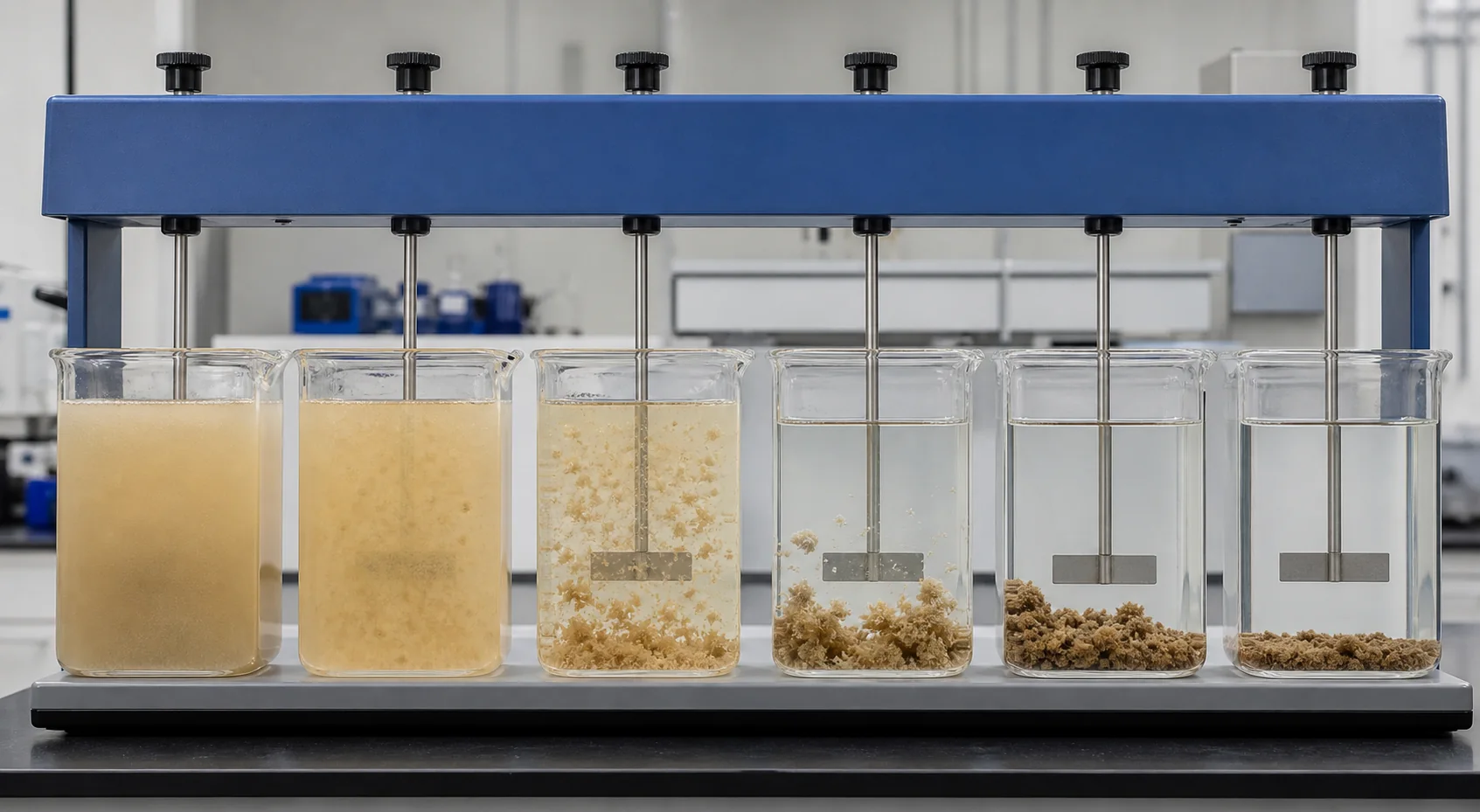
Compare clarity, capture, settling or flotation, sludge and relevant filter or reuse response across a practical dose ladder. Preserve pH, timing and sample history with each result.
Repeat the decisive points in difficult water. A narrow good result in one blend does not support unrestricted approval of every later recycle ratio, treatment-chemical carryover or production change.
Qualify the field monitoring plan
Agree which water changes trigger analysis or another jar test and who reviews the result. Calibrate feed and keep operating data aligned with the water sample and polymer lot.
Do not compensate automatically for higher conductivity by increasing dose. Verify chemistry, preparation and separator conditions first so purchasing does not normalize unexplained consumption growth as a permanent product requirement.
Request a bounded quote
Send water analyses, blend range, preparation source, separator, required results and trial quantity. Ask for proposed grades, reasons for inclusion and any limitations of the available evidence.
Use the recycle-water polymer enquiry. Compare delivered value only within the accepted envelope and preserve changes requiring requalification in the repeat-supply record.
Keep a water-envelope comparison sheet
Record conductivity with temperature, pH, source blend, relevant ion analyses, residual chemicals and solids. Mark which measurements describe preparation water and which describe process water. A single conductivity figure should not stand in for the entire chemical envelope.
Connect each accepted result to grade, stock preparation and separator conditions. The next source or blend change can then trigger a targeted analysis and test, instead of a speculative dose increase or a claim that every similarly conductive water falls within the original qualification.