
Define the reason for a second source
Identify whether the objective is supply resilience, an alternate form or a different cost position. Preserve the incumbent's accepted identity and operating limits. A backup source needs its own evidence rather than inherit approval from a similar trade description.
The type-selection guide keeps charge and function in context. Similar ionic labels and nominal molecular-weight statements are not proof that two formulations are interchangeable.
Compare at the same actual duty
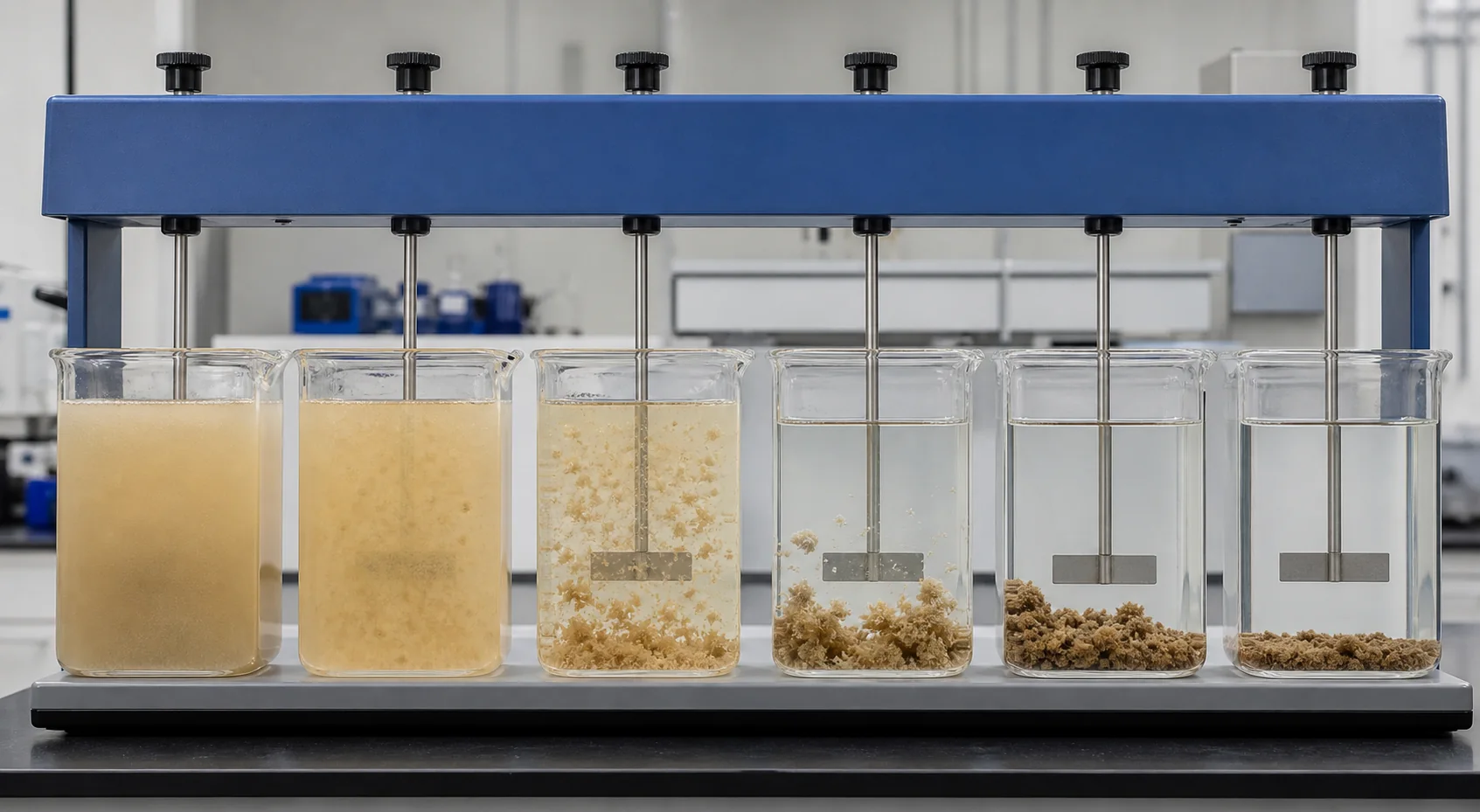
Use representative water, the same primary coagulant and a defined separator endpoint. Include normal and difficult conditions that matter to the purchase. A replacement tested only in an easier sample is not a qualified backup.
Record differences in analytical, preparation or hydraulic methods. Where comparisons are incomplete, keep that limitation visible instead of treating two unrelated supplier reports as equivalent evidence.
Preserve both product and active quantities
Normalize active basis where useful but keep actual supplied-product dose and density or concentration information. A formulation may need a different product addition to meet the accepted outcome.
Do not require unchanged pump settings as proof of equivalence. Verify calibration and the approved operating range for each grade, with any application-specific use conditions retained on their correct basis.
Evaluate feasible preparation
Compare wetting or inversion, concentration, residence and transfer in the installed equipment. A backup that needs different tanks, water or handling cannot be treated as an instant substitute without planning those changes.
Use the form-change approval plan when the alternate changes supplied form. Document one-time transition requirements separately from recurring chemical economics.
Approve separator and downstream response
Measure the required water, capture and solids results, including relevant filter or reuse effects. Repeat decisive points and avoid ranking only by visible floc or the best isolated jar.
The responsible process team should decide whether the alternate meets a comparable operating window or is accepted only for restricted conditions. Conditional approval can support resilience without overstating coverage.
Plan the controlled crossover
Keep stocks identifiable, verify product selection at the preparation point and define the authorized changeover procedure. Avoid uncontrolled mixing of incumbent and alternate that prevents attribution or changes handling.
Agree monitoring, stop conditions and return-to-incumbent criteria under the operator's procedure. Purchasing urgency should not override product eligibility or unresolved technical conditions.
Document the backup release
Record supplier, grade, form, preparation, calibration, water boundary and accepted results. State receiving checks, notification requirements and the trigger for another comparison. Keep the alternate's records separate from the incumbent's.
Use the second-source polymer enquiry with current material and process data. An approved backup is a defined operating option, not a guarantee that every same-charge product can be substituted without review.
Keep two receiving standards distinguishable
Give the incumbent and approved alternate separate records for code, active basis, preparation, calibrated feed and accepted treatment envelope. Mark differences that operations must respect during crossover, including equipment or product-use restrictions.
Keep the alternate's lot and formulation changes under its own notification process rather than borrow the incumbent's documents. If only part of the water range was covered, preserve that restriction in the order and inventory release so an emergency call-off remains within an actual qualification, not an assumed same-charge equivalence.