
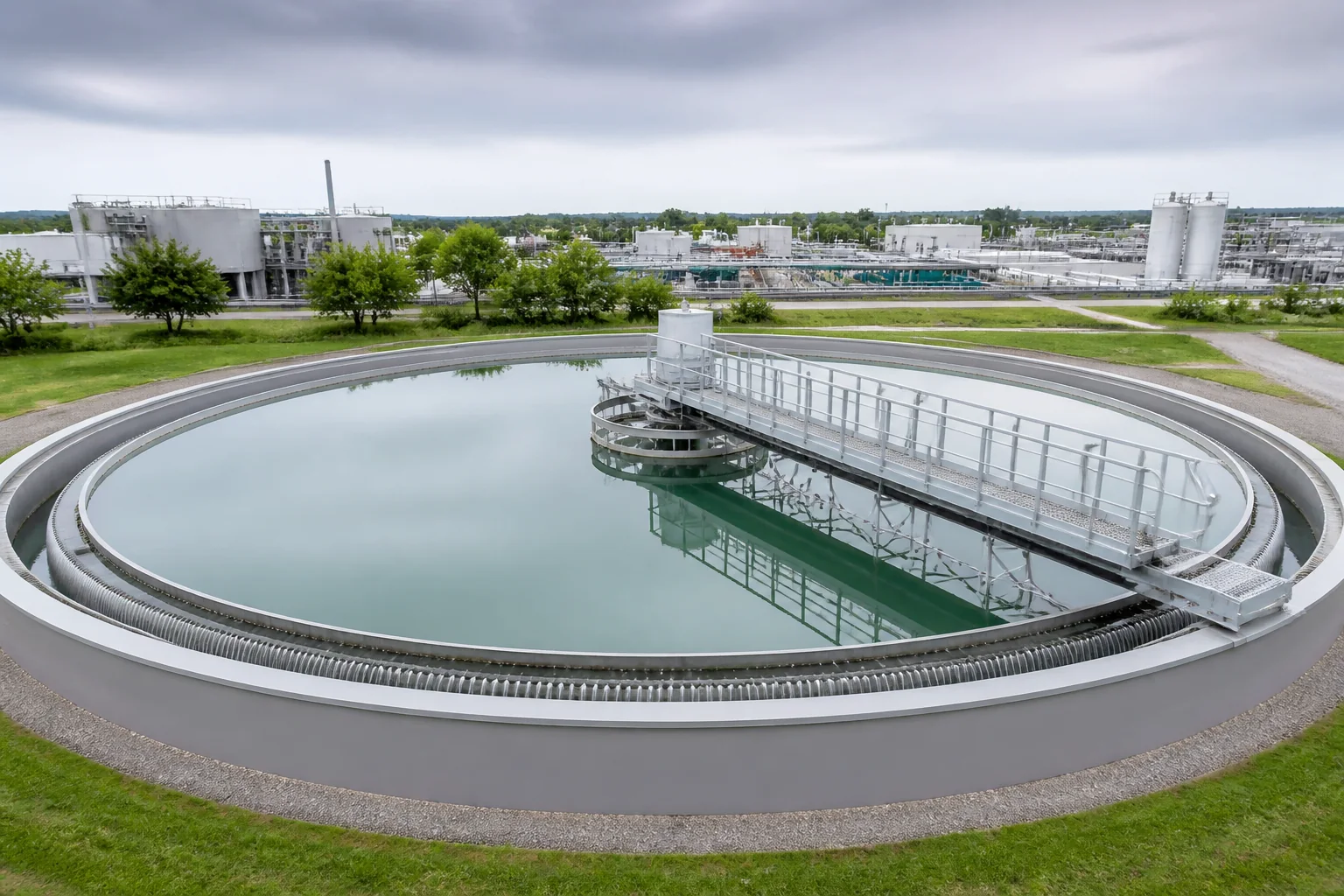
Define the water and separation duty
State the source water, mineralogy, fines distribution, solids concentration and recycle-water chemistry, coagulant sequence, separator and downstream process before comparing polymers.
A product that works in one water cannot be assumed to transfer to another turbidity, mineral or hydraulic condition.
Preserve a representative sample
Record sampling point, operating state, pH, temperature, turbidity or suspended solids, alkalinity, conductivity and upstream chemicals.
Mix the bulk sample consistently before splitting jars and retain the untreated reference.
Screen ionic profile and form
Compare coded anionic, cationic and nonionic candidates across plausible molecular ranges and powder or emulsion forms.
Charge information narrows the screen; measured clarification and downstream response decide the result.
Normalize preparation and dose
Keep active basis, stock concentration, water quality, aging, addition order and matched solution age and gentle post-dose mixing consistent for every candidate.
Unequal make-down or dose conversion invalidates a supplier comparison.
Measure the complete treatment result
Track interface settling, overflow clarity, underflow density and water recovery, floc strength, separation rate, clarified-water quality, sludge volume and filter consequences.
Large visible floc is not sufficient if it breaks, carries over or shortens the filter run.
Release a bounded operating window
Link product code, lot, raw-water condition, dose basis, mixing, measurements, COA, SDS, packaging and quotation.
Revalidate after a meaningful water-source, coagulant, equipment, preparation or product change.