
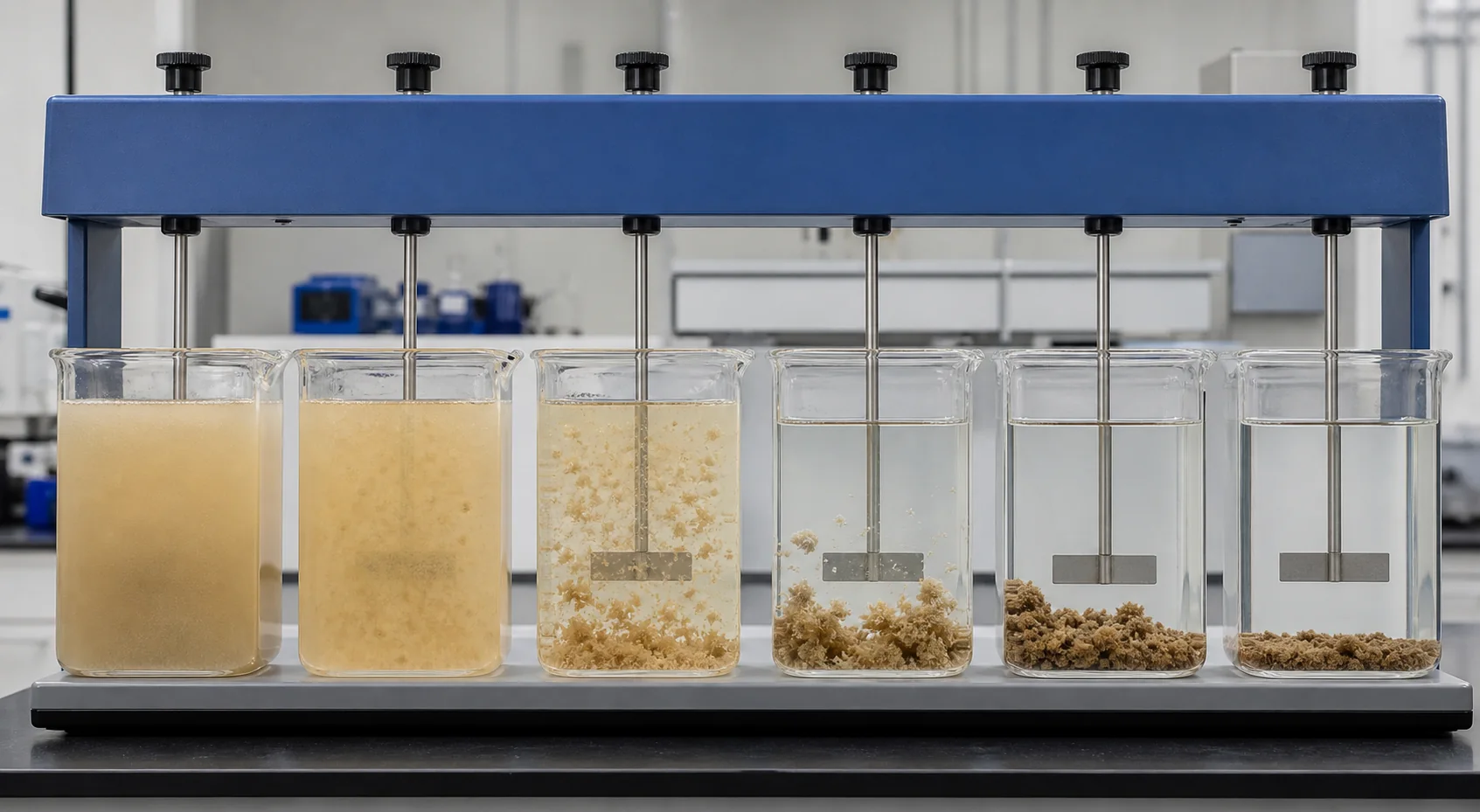
Define the trial decision
State the candidate grade, current program, water envelope and outcome that will determine acceptance. Separate screening success from authorization for plant use and repeat supply. A promising jar supports a controlled proposal, not universal release.
The jar-test record should identify the practical window. The operator must own safe trial limits, monitoring and decisions affecting treatment or downstream equipment.
Estimate a defensible material quantity
Use planned throughput, observation periods and a bounded evaluation range to forecast needs. Keep sample, trial and monthly quantities distinct. Include justified commissioning or repeats without presenting the estimate as a recommended universal dose.
Confirm supplied form, pack, unloading, segregation, preparation and feed capability before ordering. A trial becomes difficult to interpret when incumbent and candidate cannot be distinguished or actual consumption cannot be measured.
Preserve a representative baseline
Record water state, flow, coagulant, correction, current polymer and separator condition. Choose stable comparison intervals and keep difficult credible conditions in scope. Note unavoidable source or production changes.
Do not compare the incumbent during a difficult period with a candidate during easier water and call the difference a product benefit. Retain the raw timeline and the basis for selecting comparison intervals.
Calibrate preparation and delivered dose
Verify concentration, active definition, density where applicable and actual pump or feeder output. Record solution age, preparation water, mixing and transfer. A command setting alone is not evidence of delivered product.
Use the dose-basis method to connect laboratory quantities with plant feed. Review water flow signals and any changed product form before using the old calibration.
Follow water and solids through separation
Measure the agreed clarified or floated water, capture, underflow or float handling and relevant filter or reuse results. Match sampling times to process response and preserve analytical methods.
Floc appearance and one clear grab sample cannot establish a complete trial pass. Record the observation period, conditions represented and any downstream outcome still requiring confirmation.
Agree pass, conditional pass and stop rules
Name the required operating window, review limits, sampling frequency and responsible decision team. Preserve the operator's authority to stop the comparison under the approved procedure.
Conditional approval should state the remaining test or required control. If the baseline changes materially, an inconclusive result may be more accurate than forcing a favourable or unfavourable supplier verdict.
Release the purchase with the evidence
Connect accepted grade, lot, preparation, water range, actual consumption and separator results to price and receiving controls. Keep technical approval separate from commercial agreement on bulk demand or delivery timing.
Use the clarification trial enquiry with the intended scope and quantities. The final record should let operations and purchasing reproduce the acceptance, not rely on an informal statement that the sample worked.
Write a decision-ready trial summary
Use one summary linking grade and lot, comparison dates, water state, actual feeds, preparation batch and agreed water/solids results. Record deviations and the stable intervals used for the conclusion. Identify which difficult conditions or downstream effects were not represented.
State the person responsible for technical release and whether follow-up evidence is still required. This lets purchasing distinguish a controlled pass from an encouraging observation and ensures that a quoted bulk quantity does not silently remove the limitations attached to the sample or field trial.