
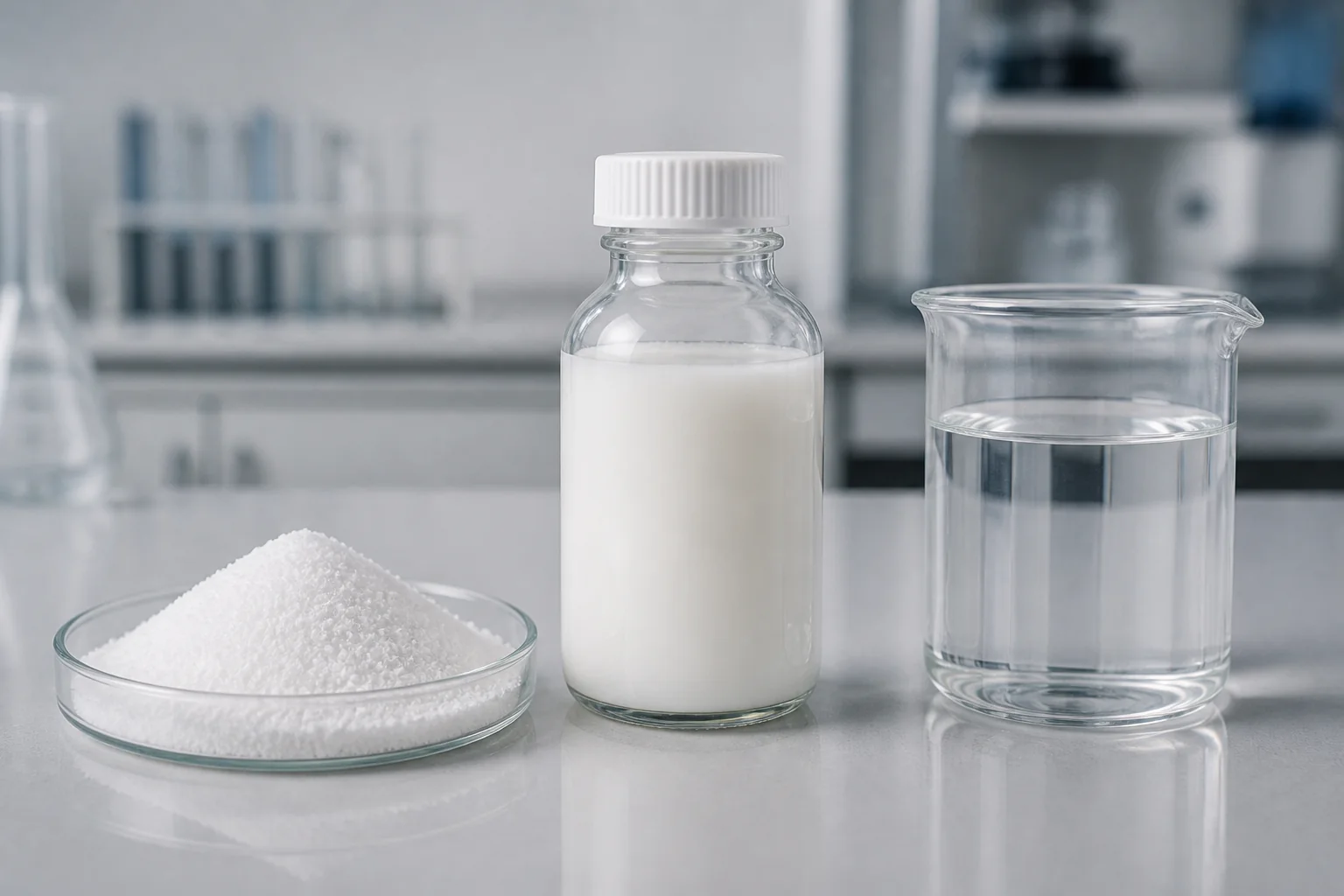
Describe the installed preparation train
List dry feeder or liquid metering, wetting or inversion device, tanks, dilution and transfer to injection. A nominal unit capacity is not enough to establish whether the proposed grade can be prepared reliably.
The form comparison establishes the equipment distinction. Ask the supplier to identify preparation requirements for the exact grade rather than provide one generic polymer instruction.
Calculate useful residence and demand
Use usable preparation volume, withdrawal rate and operating sequence to assess available residence. Include short-circuiting, interruptions and peak demand where the process team identifies them. Nominal tank volume divided by average flow may overstate practical preparation time.
Keep water-treatment throughput, solution feed and product consumption separate. A proposal that satisfies average demand can still be unsuitable during the short peak that controls the required unit capacity.
Provide the preparation-water envelope
Record source, temperature, pH, conductivity and relevant residual chemicals. Distinguish preparation water from the water being treated. A candidate may need an operating condition unavailable in a recycled or seasonal supply.
Follow grade-specific guidance and test the credible difficult preparation condition. Do not assume any clear-looking solution is fully developed or that one water analysis permanently represents every operating period.
Keep concentration and activity explicit
State the intended supplied-product and active basis, stock concentration and final dilution. Include density for relevant volumetric product feed and verify actual metering. A concentration change can alter residence, pump duty and delivered dose.
The dose calculation guide preserves these conversions. Do not compare nominal pump percentage between formulations without calibration and the correct concentration basis.
Inspect preparation quality and transfer
Record wetting, agglomerates, inversion, solution uniformity and any defined screen or performance checks. Map shear after activation through pumps, valves and recirculation. A preparation fault and mechanical damage require different investigations.
Use safe sampling and the accepted grade procedure. Do not repair uncertain preparation by improvised aggressive mixing and then treat the resulting response as the normal capability of the polymer.
Link unit feasibility to separation evidence
Run the candidate through a preparation and transfer route that represents the plant, then measure the required separator result. A beaker prepared by an unavailable method cannot qualify the supplied form for this unit.
Record preparation water, concentration, age, throughput, equipment and treatment result with the accepted sample. If a hardware change is needed, separate its cost and approval from the recurring chemical offer.
Send an equipment-ready enquiry
Provide the equipment arrangement, usable tank volumes, feed ranges, water analysis, peak demand, trial scope and destination. Ask for a feasible preparation proposal, applicable product guidance and any limitations.
Use the make-down-compatible polymer request. Select the grade that can deliver the accepted treatment within actual equipment constraints rather than the product with the most attractive isolated viscosity or unit price.
Keep a capacity reconciliation record
Use the actual useful tank volume, batch cycle, withdrawal profile, peak water-treatment demand and measured product addition to describe the preparation duty. Note whether equipment assumptions came from design information or were verified in operation.
Link that record to the grade's feasible concentration and development time. If the supplier proposes a different make-down route, state the required hardware or operating change before award. This avoids accepting an attractive sample whose preparation exceeds the unit's practical capacity during the very peak that controls the purchase.