
Keep grade changes distinct from form changes
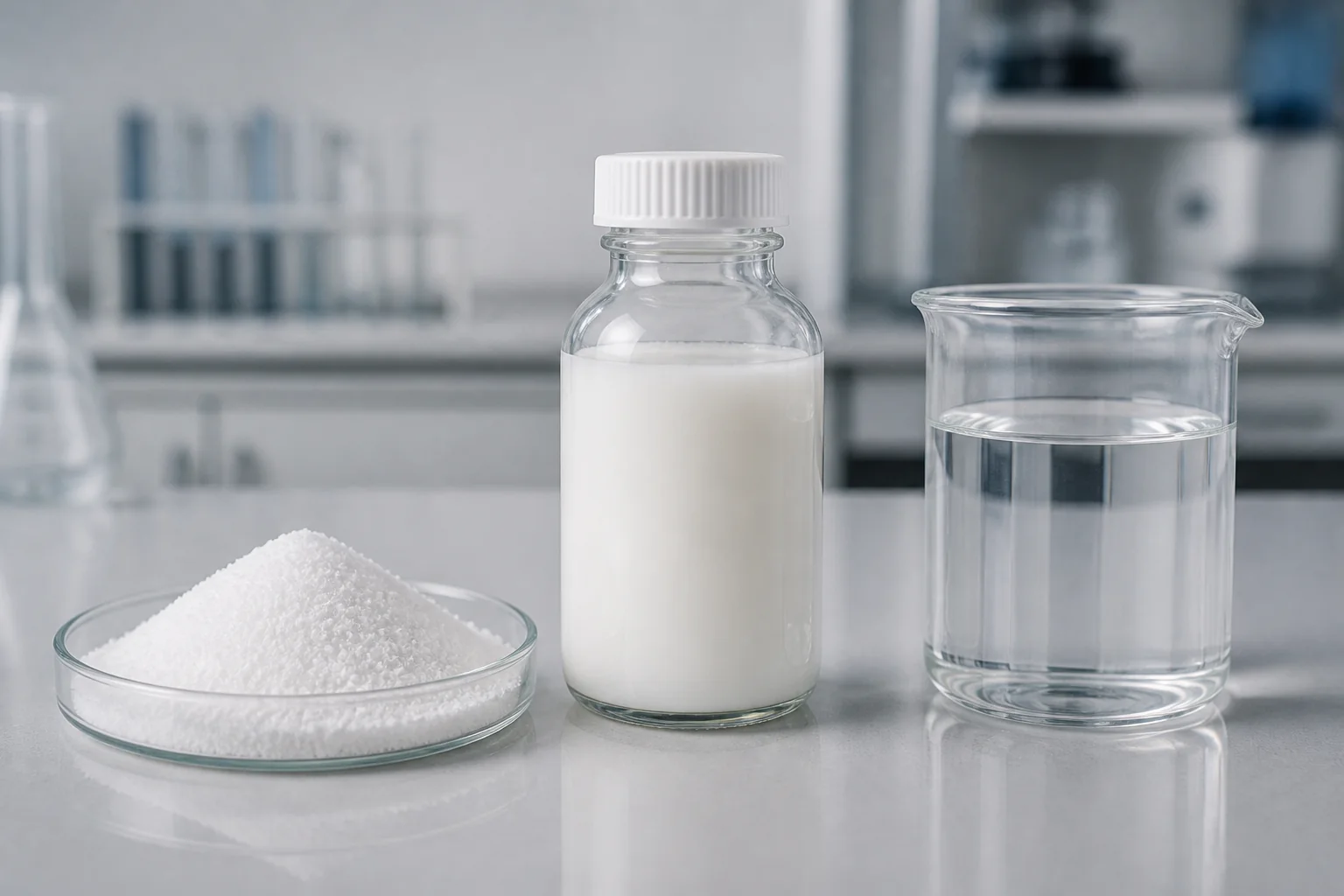
Switching powder and emulsion may also change ionic profile, polymer distribution or formulation constituents. Ask the supplier to identify what is actually changing. The two forms should not be treated as identical material with different packaging.
The technical form comparison establishes the process questions. Purchasing needs a controlled transition plan that preserves both the tested identity and the practical equipment requirements.
Audit the preparation route
For powder, review feeder, wetting, hydration volume and transfer. For emulsion, review neat-product storage, metering, inversion and dilution. Use current grade instructions and actual water temperature and chemistry.
Record usable tank residence at the planned withdrawal rate rather than nominal tank capacity alone. A candidate that works only after unavailable laboratory preparation is not a qualified substitute for the installed operation.
Normalize dose without forcing equivalence
Declare supplied-product, active polymer and prepared-solution quantities separately. Use formulation density when converting a volumetric emulsion feed. Confirm the active definition rather than equate total solids automatically with polymer.
Equal active addition structures a comparison; it does not prove equal performance. Keep actual delivered product consumption with the water and separator results so commercial calculations use the material that will be purchased.
Compare under stable treatment conditions
Run the incumbent and candidate in the same representative water with feasible sequence, mixing and separation. Measure clarity, capture and relevant solids or filter consequences. Include difficult conditions and repeat the important operating region.
Do not approve from preparation speed alone. A faster inversion time can coexist with narrower dose tolerance or weaker downstream behaviour. Retain the complete comparison rather than only the most favourable number.
Plan segregated field stock
Confirm trial packaging, tank or bag segregation, calibration and transition responsibility before delivery. Avoid uncontrolled mixing with the incumbent that prevents attribution or changes preparation behaviour. Use the operator's approved handling process.
Define how remaining old stock and any unsuccessful candidate will be managed. Inventory and cleaning requirements belong in the purchase evaluation rather than become unplanned costs after the delivery arrives.
Compare total operating value
Include delivered product cost, demonstrated consumption, water, equipment, labour, cleaning, stock losses and measured downstream consequences. Keep one-time conversion costs separate from recurring operating costs.
Use the accepted-water cost worksheet and state the period represented. Do not assign permanent savings from a short trial that did not capture source-water or production variability.
Release the changed supply deliberately
Record new code, preparation procedure, calibration, operating window and receiving controls. State pending evidence and any restriction on repeat orders. Material substitutions need notification and review rather than inherit the old product's approval.
Send the current and proposed forms, equipment details, water data and trial schedule through the form-change enquiry. An agreed changeover is preferable to replacing product units in the pump calculation without testing the treatment route.
Keep the changeover worksheet separate
Use distinct entries for the incumbent and proposed grade, active definition, density basis, preparation residence, required equipment and calibrated feed. State how remaining incumbent stock and trial material will stay traceable during the transition.
Record the accepted treatment result and practical restrictions beside the changeover costs. This prevents the laboratory from approving equal active additions while purchasing assumes unchanged product mass, or operations continues a previous pump setting that no longer corresponds to the evaluated dose.